
Ulster Immigrant Defense Network Steps Up
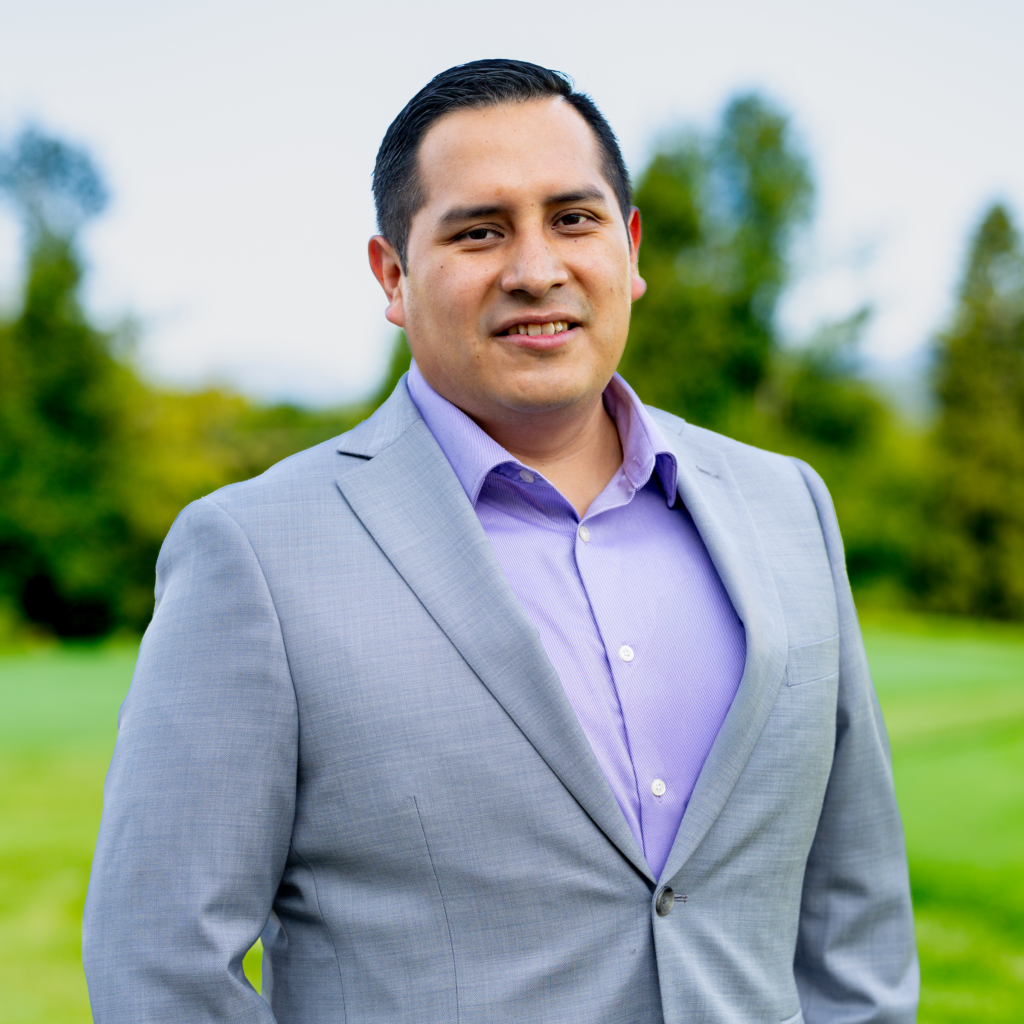
Executive Director Victor Cueva Milla on building stability for immigrant families in uncertain times
Ulster Immigrant Defense Network (UIDN) was founded in 2017 in response to rising anti-immigrant sentiment. What began as a volunteer-driven effort led by the late Reverend Frank Alagna and other community advocates quickly grew to meet urgent and evolving needs. With Holy Cross/Santa Cruz Episcopal Church providing space, UIDN expanded its volunteer base to more than 400 community members. In 2020, the organization formalized its work by obtaining 501(c)(3) nonprofit status.
Recently, UIDN welcomed career-long immigration advocate Victor Cueva Milla as its new Executive Director and first full-time hire, bringing lived experience, regional knowledge, and extensive immigration legal expertise to the role. As the nation faces renewed uncertainty around immigration enforcement in 2026, we spoke with Victor about what immigrant families in Ulster County need most, how UIDN continues to grow as a trusted source of stability and support, and how residents can get involved.
1. What does UIDN do day-to-day for immigrant families in Ulster County?
Generally speaking, our mission is to create a network of safety for immigrants. That means addressing issues like legal needs, food access, and housing insecurity.
Through our legal clinics on Mondays, two groups of volunteer lawyers advise on immigration and family preparedness to protect children in case of deportation.
Our food pantry, which is highly attended by immigrant communities, is open on Wednesdays. We provide produce, proteins, and culturally relevant staples like Maseca flour. It wouldn’t make sense for us to distribute items that won’t be used, so volunteers take time to understand what families need and want to consume while balancing a healthy diet.
Two part-time case managers help with everything from rent and utility assistance to navigating court systems, schools, medical events, and transportation.
We also work with school districts and superintendents to raise awareness of immigrant needs and heightened surveillance and enforcement activity.
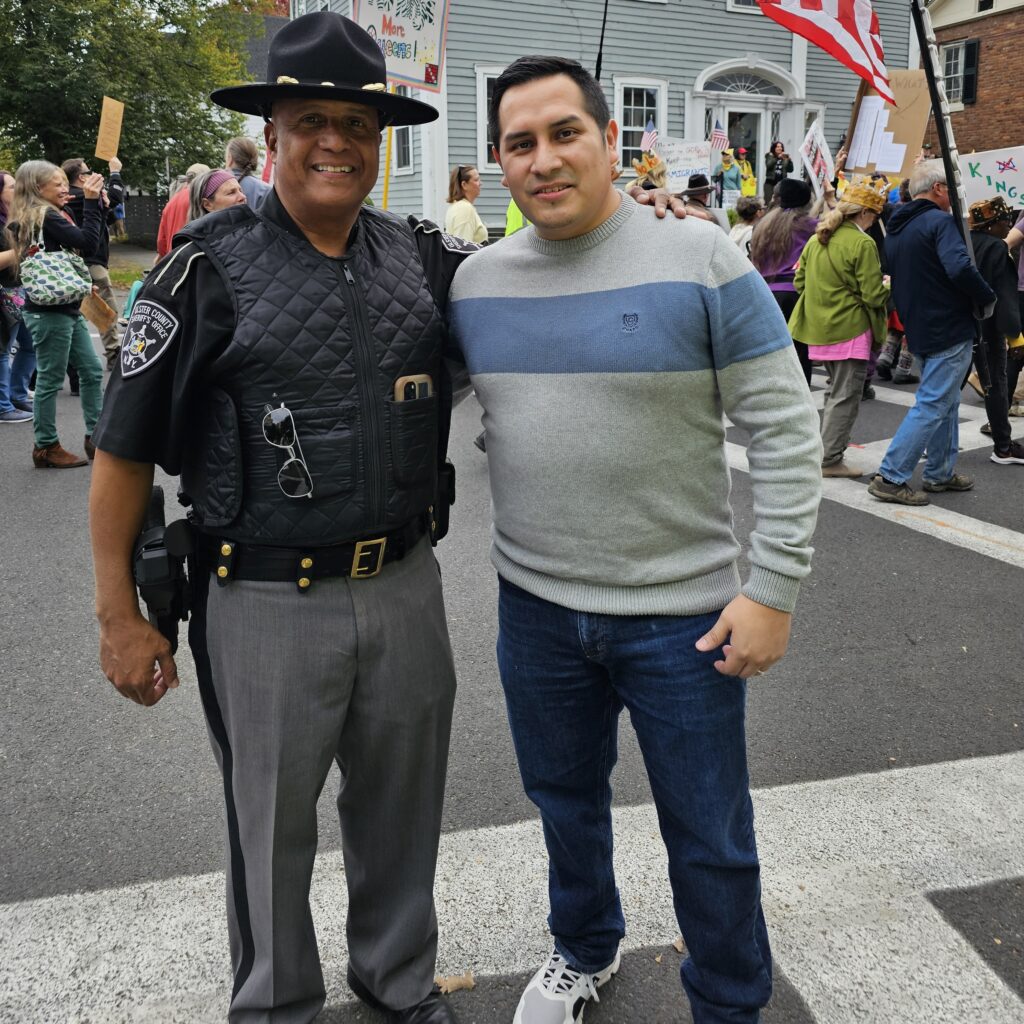
Victor Cueva Milla with Ulster County Sherriff Juan Figueroa
2. What kinds of situations or calls are you seeing most often right now? What are families worried about when they reach out?
Right now it’s winter, and winter is by far when we see the highest volume of calls related to rent assistance. Many immigrant families work in manual labor jobs — construction, landscaping, restaurants, house cleaning — and winter slows that work down. That leads to struggles paying rent.
We also see an increase in food pantry usage during winter. Even despite bad weather, attendance remains high, with only a small decrease during storms. Utilities are another major concern — particularly electric bills and heating costs during winter.
Since I started in September, legal support has also been a constant need. Access to attorneys is a major concern, and our free consultation model has been heavily utilized.
3. UIDN is often described as “trusted neighbors in uncertain times.” What does trust look like in practice, and how do you earn it?
When you treat community members as people with dignity and respect, that’s a great place to start. Cultural awareness and cultural humility are critical. Cultural humility isn’t something you master overnight — we learn every single day about the populations we serve and their needs, and we meet them where they are. We look at individuals as whole people — not as numbers or cases. You can treat someone as just another file, or you can treat them with humanity. Our staff and volunteers choose the latter.
It helps that UIDN was founded by Father Frank at Holy Cross Church, a trusted community leader and immigrant advocate. I also bring lived experience. I was undocumented for 10 years. I’m an immigrant from Peru. I’ve worked as an immigrant advocate and as a lawyer. That lived experience adds to the trust that has been built since 2017, when UIDN was a volunteer group doing its best to help immigrants before becoming a formal nonprofit.
People know they can talk openly and candidly here without judgment, in a safe space.
4. What connections are you seeing between immigration challenges and basic needs like food, housing, or access to services?
Whenever there is heightened immigration surveillance and enforcement activity in Kingston, especially in Midtown near our location, families often fear leaving their homes to obtain services at the very moment they are needed.
Detentions destabilize entire family units and communities. Often the person detained is contributing to household income or is the main breadwinner. It also deeply affects children. School attendance and performance can suffer.
When detentions happen, it’s all hands on deck. Families need support beyond legal guidance: rent and utilities assistance, food pantry access, case management, and coordination with schools. Our goal is to mitigate the negative impact through coordinated support.
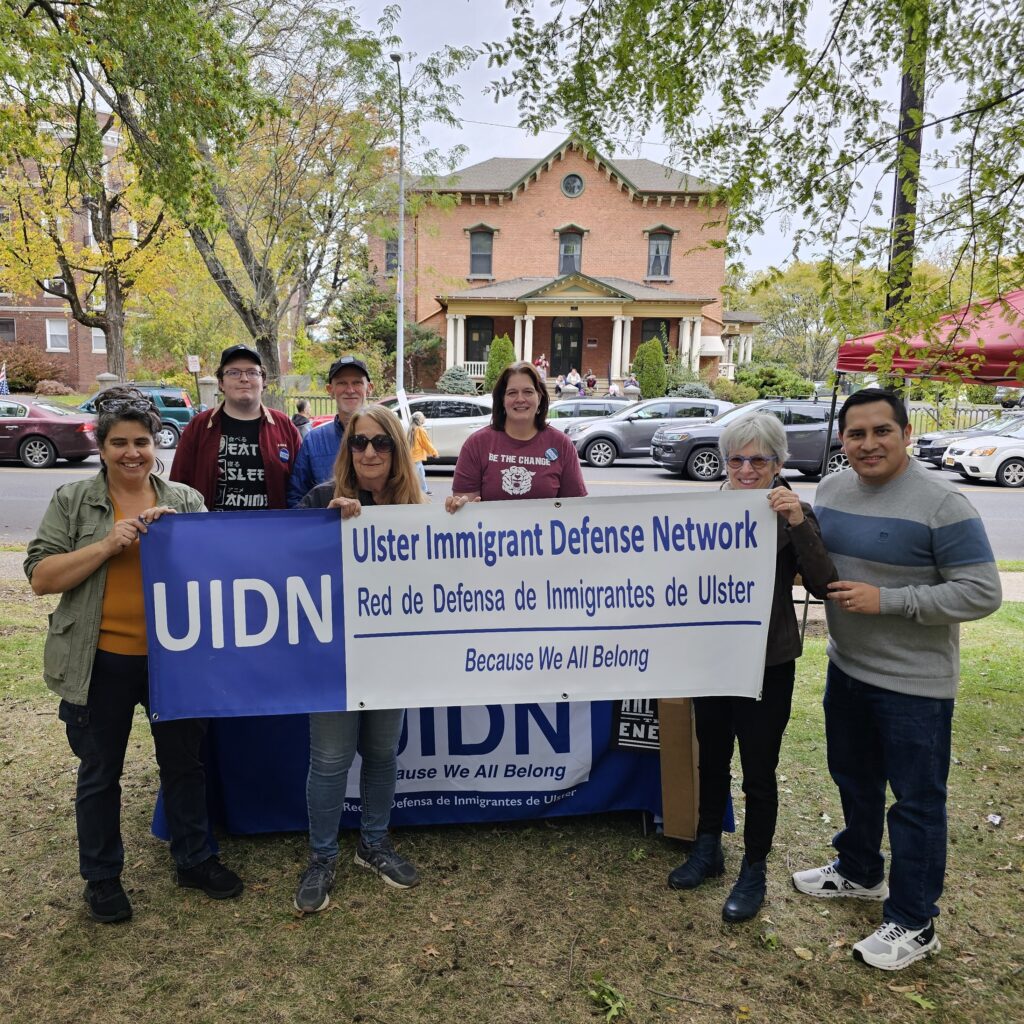
Victor Cueva Milla with UIDN volunteers
5. Can you share a recent example that shows the difference UIDN makes for a family?
The food pantry has been a major highlight. This winter, we’ve consistently served up to 300 families per week. For a small nonprofit with two part-time case managers, one full-time executive director, and a part-time development director — with the rest being volunteers — feeding up to 300 families weekly is a major achievement.
On one of my first days on the job, during an executive meeting, a case manager informed me that a community member had just been detained. We immediately went to the family’s home. We saw a traumatized family — children crying because their loved one had been taken. The most disturbing part was that an 11-year-old child had been left unattended in the backseat of the car during the detention.
Within a few hours, we secured a legal consultation, provided emotional support, opened access to all our programs, and coordinated with the child’s school. In an incredibly difficult situation, we were able to stabilize and support the family quickly.
6. How can neighbors support this work right now?
We have over 400 volunteers — an incredible show of community support. More volunteers are always appreciated.
Financial contributions are also critical. You can donate through our website or host a fundraiser as an individual or business. We’ve been humbled by spontaneous community fundraising efforts — businesses donating a day’s profits, selling t-shirts, hosting happy hours.
As for growth, one of my major goals is to expand our immigration legal program. There is currently no nonprofit in the Mid-Hudson Valley with a full-time immigration attorney. Achieving that will require long-term investment. We would welcome the partnership of Community Foundations fundholders and supporters who want to help make that vision a reality.
Beyond UIDN, people can check on their immigrant neighbors, inform others about their rights, and offer emotional support during difficult times. Being a good neighbor matters.
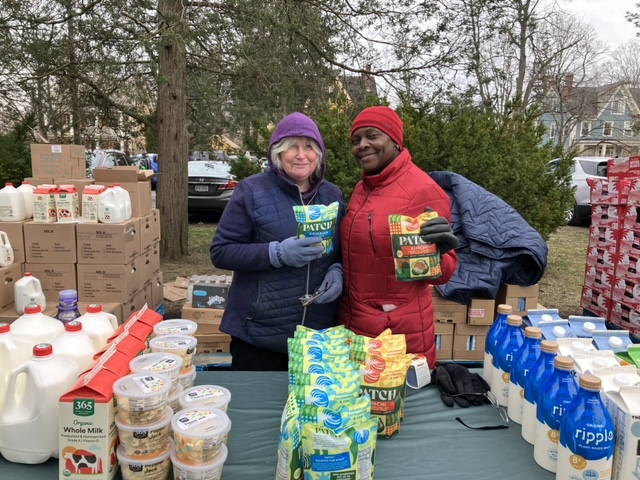
Fareground
Support Food Security in Our Region
Our Fund for Food Security helps ensure everyone in our region has access to healthy, nutritious meals. The fund supports a range of effective organizations — from those leading regional policy and large-scale distribution, to groups serving specific communities and populations. Give today and sustain these lifeline programs.


